About Us
Learn about APC: who we are, our sharing rates, and our role in supporting the national economy.

Who We Are?
APC is a refinery company that has a unique position between the international refining companies. Our Mission is fulfilling the needs of the local market from the petroleum products and exporting the excess in order to increase the national income and to save the foreign specie. In order to do that, we use the advanced technology to put into effect the highest production rate and to renew the styles of the work and to develop the information systems for enhancing the operating economies. Also achieving the government policy in the field of privatization by executing the several from the joint-stoke companies with the private sector.
Sharing Rates
APC has a quite good Sharing Rate in some of the petroleum sector companies.
Our Role
In Supporting the National Economy
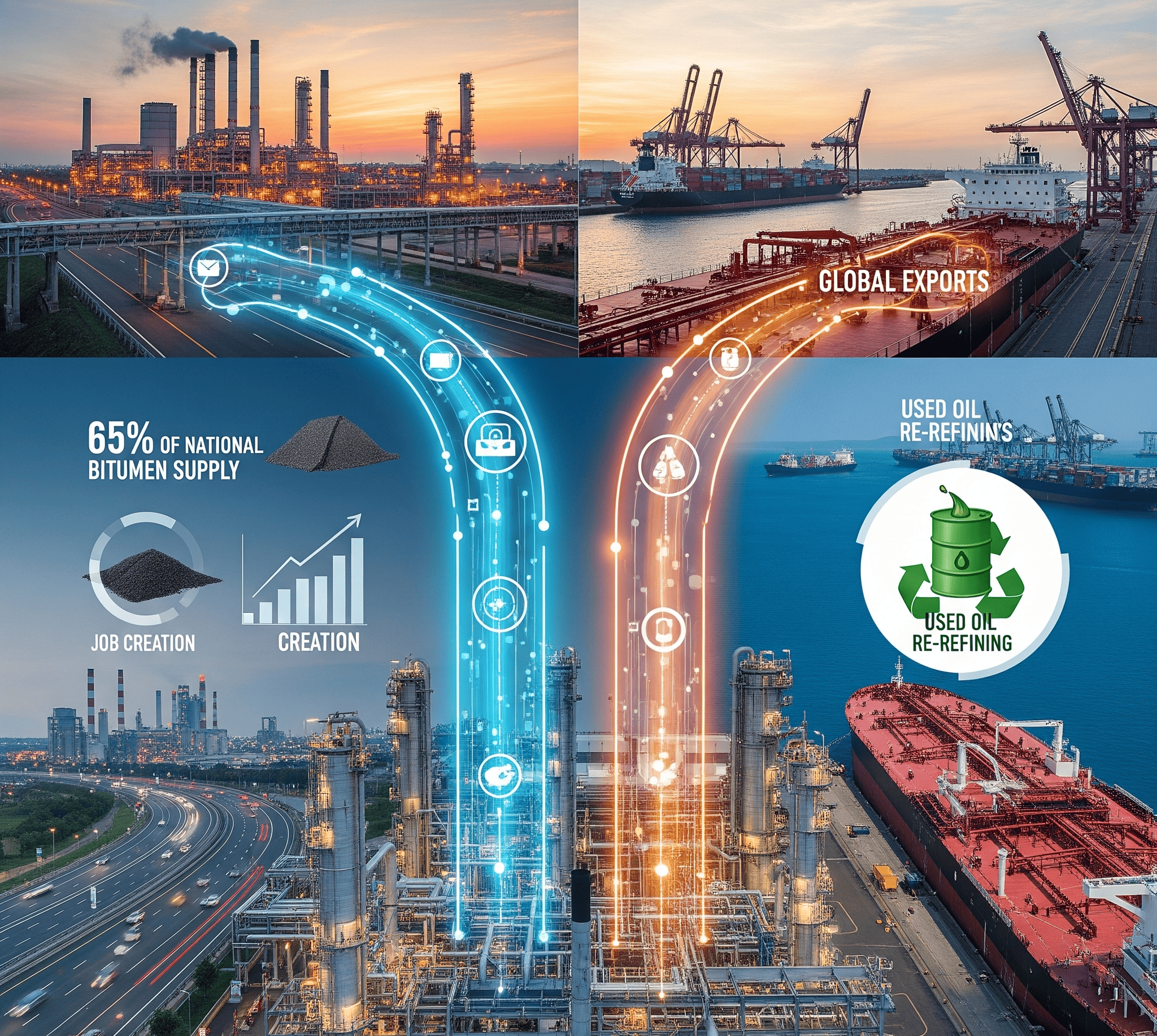
Insuring the Availability of the Petroleum Products for the Local Market and Reducing the Importation Rates
APC has a unique position between the international refining companies as it produces:
- 55% of the national consumption of basic oils.
- 80% of the national consumption of special solvent, e.g free odor hexane.
- 65% of the national consumption of bitumen products and heavy duty bitumen.
It is the only company which has the facilities to export the oxidized bitumen and heavy duty bitumen in liquid state, also exporting the soft wax in the liquid state.
- Exporting around 47,400 tons per year hard oxidized bitumen.
- Covering AMOC's needs from straight run fuel oil 950,000 tons per year.
- Around 1,011,809 tons per year, Naphtha is exported; this is done after covering all ANRPC's needs from Naphtha (its feed) which consumes around 750,000 tons per year.
- The company owns the greatest and highest technology for refining the used oils by the power of 30,000 tons per year supply and its products are marketed in the local market which is around 2,500 tons per year.
- Exporting 1,500 tons per year from hard and pebbles waxes.
- Exporting 3,106 tons per year from Hexane.
Our History
The Company Development Since It Has Been Established

Year 1954
APC was established with small refinery 250.000 ton / year capacity for satisfying Alexandria city and west delta area from the petroleum products.
Since then our refining capacity had increased up to 4.7 million ton/year by executing three crude distillation units No. 2 , No. 3 and No. 4 at the years 1963,1968 and 1982.

Year 1979
The solvent production complex started in operation under the license of UOP to produce hexane, petroleum ether, and petroleum solvents.
In the mid of year 1982
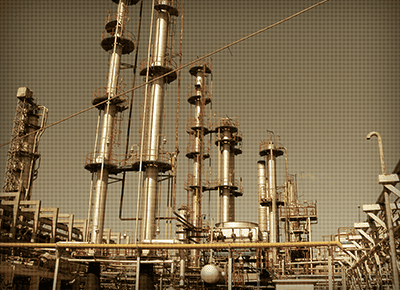
The lube oil complex started in operation with design capacity 100.000 ton/year bright stock oil based on fuel oil feed from light Arabian crude oil origin.
In 1983
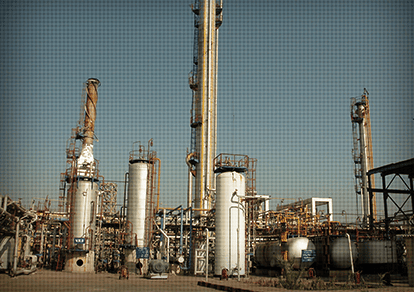
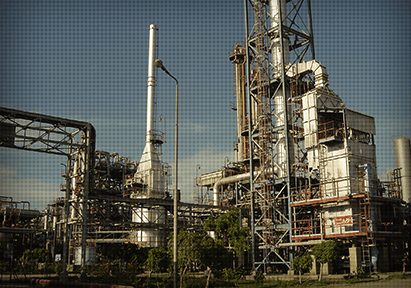
The vapour recovery unit was started in operation to produce stabilized gasoline and LPG.
In 1989
The Hexane and Kerosene complex started with annual production capacity of 22.000 ton hexane or 18.000 ton treated Kerosene under the license of IFP.
In 1997
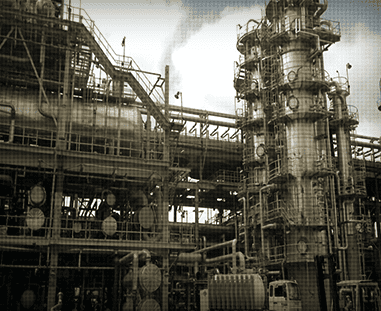
Bitumen blending, oxidation and solidification unit started in operation to produce solid bitumen package in 25 kg blocks.
The spent oil re-refining unit started in operation with capacity 30.000 of spent oil and under the license of KTI
ISO Certifications
Alexandria Petroleum Company Obtains Several ISO Certificates
For the first time since the company establishment in 1954, Alexandria Petroleum Company has succeeded in obtaining the following three different ISO certificates

ISO 9001 : 2015
Quality Management System
This certificate is the most known and widely used. And to obtain this certificate, the company must adhere to the international quality standards for all its activities.
All the production, commercial and inspection processes within the company are conducted according to the international quality system


ISO 14001 : 2015
EMS Environmental Management System
The specifications of obtaining this certificate is related to the environmental management system within the company, contributing to improving its environmental system and improving the efficiency of work
ISO 45001 : 2018
Occupational Health & Safety Assessment Services
The certification standard is based on the management of occupational safety and health system within the company's various sites, in accordance with internationally recognized standards and is the first international standard for occupational safety and health management systems
ISO 27001 : 2022
Information Security Management Systems
This certificate is the world's best-known standard for information security management systems (ISMS). It defines requirements an ISMS must meet.
It provides companies from all sectors of activity with guidance for establishing, implementing, maintaining and improving an information security management system
ISO 17025 : 2017
Testing & Calibration Laboratories
This certificate sets out requirements for the competence, impartiality, and consistent operation of laboratories, ensuring the accuracy and reliability of their testing and calibration results
This standard is vital for laboratories as it enhances the credibility of their testing and calibration work, fostering trust among clients and regulatory authorities

ISO 50001 : 2018
Energy Management Systems
This certificate is the newly revised international standard for Energy Management providing the most robust framework for optimising energy efficiency in public and private sector organizations.
It provides organizations with a standard that ensures requirements are met for compliance with the Energy Saving Opportunities Scheme (ESOS)

These certificates grant Alexandria Petroleum Company many advantages, including but not limited to. Increase and improve the quality of the company's production, contribute to reduce waste and reduce cost, and increase the rate of demand for services provided by the company as high quality services, and thus become the company's logo (logo or logo), recognized at the global level in the marketing of petroleum products, The company aims to improve and increase its financial resources and high profits, which benefit the general budget of the state and the workers in the oil sector.
Our Chairmen
Over The Years
Environmental Management
What We Do to Protect the Environment & Reduce the Pollution
We follow the international modern technology to reduce pollution and implement the environmental management policy system unit to protect it by taking certain procedures:
- The operations at the unit site must be safe and clean.
- Environmental protection of Air, Water, Soil and reduce noise.
- Sharing and supporting the scientific search.
- Ensuring that the petroleum product specifications are friendly with environment.
- Using re-cycling, re-using methods and decreasing the loss during the processes operation.
- Environmental training and awareness.
- Reduce petroleum wastes & Treating waste gases and waste liquid.
- Treating product which is used as a fuel.
- Re-cycling and Re-using petroleum waste.
- Using protective maintenance system & close cooling systems.
- Re-refining used motor oil.
FAQs — Used Lubricating Oil
Lubricants are generally produced from the basestocks refined from the heavy fractions of crude oil or other hydrocarbons, to which various additives are blended.
Lubricants are used for a wide range of applications, including: engine and transmission lubricants fluids, metal, working fluids, insulating and process fluids and greases.
During service in these applications, part or all of the lubricant may be consumed in the process, The balance tends to become contaminated with substances such as water, metal particles, rust, dirt, carbon and lead, and with other by-products of the combustion or the industrial process.
Used lubricating oil has an inherent value. To save scarce resources, this inherent value should be recovered, where this is economically justified. This allows recycling of the used lubricating oil back to lubricants, or their conversion into products such as furnace fuels, power station start-up fuels, and diesel fuel extenders.
On the other hand, dumping of used lubricating oil, or any other environmentally unsound disposal practice, can lead to the contamination of soil, air and groundwater.
- The damage used oil causes comes from mismanagement.
- Re-refining used oil takes only about one-third the energy of refining crude oil to lubricant quality.
- One gallon of used oil used as fuel contains about 140,000 Btu of energy.
- A gallon of used oil from a single oil change can ruin a million gallons of fresh water - a year's supply for 50 people.
- Concentrations of 50 to 100 parts per million (ppm) of used oil can foul sewage treatment processes.
- Films of oil on the surface of water prevent the replenishment of dissolved oxygen, impair photosynthetic processes, and block sunlight.
- Oil dumped onto land reduces soil productivity.
- Toxic effects of used oil on freshwater and marine organisms vary, but significant long-term effects have been found at concentrations of 310 ppm in several freshwater fish species and as low as 1 ppm in marine life forms.
Lubricating oil users should ensure that any used oil generated by their operations is stored securely and safely, and collected on a regular basis. Long term storage is discouraged. In addition:
- Consideration should be given to bunding systems, impervious storage compounds, and sheltered or weatherproof storage.
- Different types of used oil should be segregated when they are stored. The mixing of used oil with other contaminants can create fire and health hazards, and should be avoided.
- Users should organise for the collection of the used oil by a collector that is licensed, or otherwise authorised to collect and transport used oil.
- Users should specify that such a collector transports the used oil to a licensed facility, such as a recycling plant, or other facility lawfully entitled to receive it.
- Householders with small amount of used lubricating oil should check with their local councils as to which waste transfer centers accept used oil, or whether there are other collection points or services are available in their areas.
In particular, the following disposal processes should be avoided:
- Uncontrolled dumping (outside authorised dumping facilities) on land, or into sewage systems or waterways.
- Dumping in household waste disposal wheelie bins.
- Unauthorised use as a dust suppressant.
- Use as a low-temperature burner fuel
The problem of re-refining used oil lies in the process of collecting it from its different resources, which in turn guarantee the availability of the feed necessarily for units operations. The oil sector has made good steps to collect the used oil which can be summarized as follows:
- Cooperation Petroleum Company and Misr Petroleum Company are charged of collecting used oil from distributing companies.
- Establishing Petrotrade Company to collect used oil from all resources so as to increase the amount of collected oil.
- Obliging service stations to establish land tanks for collecting used oil.
- Distributing companies have established central collection tanks in the governments for collecting used oil to be supplied to Alexandria Petroleum Company.
- Conviction of dealing with used oil in faulty ways and not delivering them to the authorized parties, this is in the light of the Environmental Law 4/1994, which has listed lubricating used oil among the hazardous material which is banned to be used unless there is license from the specialized administrative party, after the approval of the Environmental affair Organization.